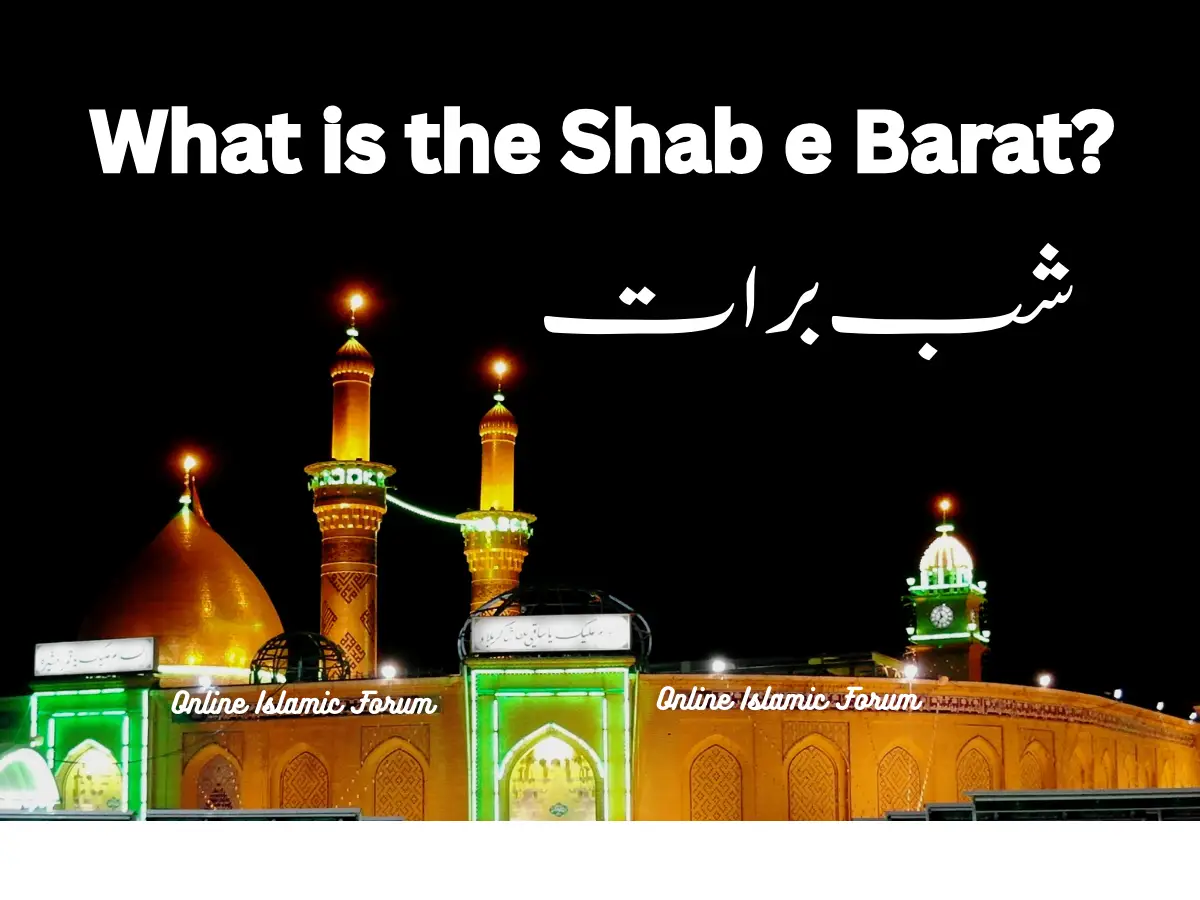

Known as Lailatul Barat or the “Night of Records,” it is the blessed night on the 15th of the Islamic month of Shaban. The Quran refers to it as a “Blessed Night,” while Hadith literature names it Lailatun-Nisf min Shaban. In this essay, we will study what is the Shab e Barat?
The term “Barat” signifies emancipation or salvation. It is believed to be a night when Allah, through His infinite mercy, pardons countless sinners, granting them freedom from divine punishment.
For the pious predecessors and major scholars, worship on this night was a regular practice. To label gatherings for prayer, remembrance (dhikr), and religious counsel on this night as an innovation (bid’ah) contradicts the continuous practice of the Muslim community throughout history.
Also read:Shab-e-Miraj And The Journey To Miraj
What is the Shab e Barat in the Light of Hadith?
The significance of what is the Shab e Barat finds strong support in Prophetic traditions:
- Hadith of Abu Bakr al-Siddiq (RA): The Prophet Muhammad (peace be upon him) said, “When the night of mid-Shaban arrives, Allah descends to the lowest heaven and forgives all His servants except the polytheist and one who harbors malice (in his heart).” Scholars note the sound status of narrations on this topic, underscoring its acceptance among early authorities.
- Hadith of Ali ibn Abi Talib (RA): The Prophet (peace be upon him) advised, “When the night of mid-Shaban comes, spend it in prayer and fast during its day. Indeed, Allah descends at sunset on that night to the lowest heaven and says: ‘Is there no one seeking forgiveness that I may forgive them? Is there no one seeking provision that I may provide for them? Is there no one afflicted that I may relieve them?’ This continues until dawn.” This Hadith beautifully captures the spirit of Lailatul Barat as a night of divine opportunity.
- Hadith of Aisha (RA): She reported finding the Prophet (peace be upon him) missing one night and later discovering him in the graveyard of Al-Baqi’. He explained, “Allah descends on the night of mid-Shaban to the lowest heaven and forgives more people than the number of hairs on the sheep of the tribe of Kalb.” This emphasizes the vastness of divine mercy offered during what is known as Shab e Barat.
These narrations collectively establish a clear basis for the special status of this night. Denying its virtue often stems from unfamiliarity with these texts and the historical practice of the righteous.
Conclusion and Summary:
In essence, what is the Shab e Barat? It is a distinctive night of divine mercy, forgiveness, and spiritual opportunity in Islam. While not a mandated festival, its observance through voluntary prayer, supplication, seeking forgiveness, and recitation of the Quran is a well-rooted, commendable practice. It is a night for personal reflection, settling disputes, and hoping for Allah’s pardon. The commemoration of Lailatul Barat stands separate from other holy nights like Shab-e-Miraj, with its unique focus on forgiveness and the annual decree. For further detailed discussion, resources like OnlineIslamicForum.com offer valuable scholarly insights.
Frequently Asked Questions (FAQs)
Q: What is Shab-e-Barat in simple terms?
A: It is the “Night of Forgiveness,” a special night for seeking Allah.
Q: Is fasting recommended on Shab-e-Barat?
A: Yes, fasting during the day following the night (15th Shaban) is recommended (Sunnah).
Q: How should one observe Lailatul Barat?
A: Observe it through optional prayers, Quran recitation, seeking forgiveness (istighfar), and sincere supplication.
Q: Are communal gatherings allowed for Lailatul Barat?
A: Yes, gatherings for permissible worship and religious reminders are acceptable and historically practiced.
Q: Is the concept of Shab-e-Barat found in authentic Hadith?
A: Yes, several Hadiths, including those in Sunan Ibn Majah and Musnad Ahmad, discuss its virtue.
Reference:
This article incorporates traditional Islamic perspectives and scholarly discussions referenced on platforms like OnlineIslamicForum.com.
Dear brothers and sisters,
“Seeking to deepen your understanding of Islam? Join our inclusive Islamic Forum—a supportive space to explore faith, ask questions, and grow spiritually alongside fellow believers.”
- Benefits of Fast in Ramadan
- Does Inhaler Break Your Fast?
- Is Fasting Good For Your Liver
- Can You Kiss During Ramadan?
- Can You Vape During Ramadan?
- Can You Smoke During Ramadan?
- Can I Masturbate During Ramadan?
- Can you drink coffee during Ramadan?
- Can You Hug Your Wife While Fasting?
- Intercourse During The Day in Ramadan
- How To Stay Hydrated During Ramadan?
- Can Vomiting Break Your Fast? In Islam
- Does Listening To Songs Break Your Fast?
- Can You Have Intercourse During Ramadan
- Can We Touch Private Parts During Fasting?
- Can you Hug Your Boyfriend During Ramadan?
- Can You Drink Water While Fasting in Ramadan?
- Can You Do Intermittent Fasting While Pregnant?
- Secret sin: Ramadan Rules For Unmarried Couples
- Can You Brush Your Teeth While Fasting in Islam?
- Can I Fast If I Make Ghusl After Fajr? in Ramadan
- Fast Of 27 Rajab in Islam