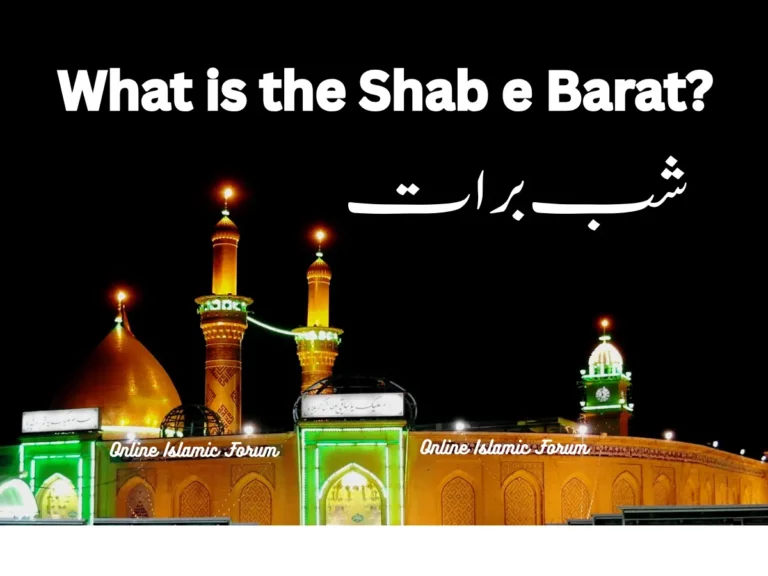
The term “Shab-e-Barat” is a compound Persian-Arabic expression. “Shab” is a Persian word meaning “night,” while “Barat” or “Bara’at” is derived from Arabic, signifying deliverance, exoneration, freedom from blame, or a writ of acquittal. Consequently, the phrase is conceptually translated as “the night of salvation” or “the night of deliverance from sins.” This exploration delves into the core Shab e Barat meaning.
Lexical Analysis: Breaking Down the Components:
“Shab” (Persian): This pure Persian word means night, darkness, or the nocturnal period. It forms compounds like Shab-e-Qadr (Night of Decree) and Shab-e-Mi’raj (Night of Ascension).
“Barat / Bara’at” (Arabic): Rooted in the Arabic trilateral root *b-r-a* (ب ر أ), which conveys the fundamental idea of being free, innocent, or absolved from blame, defect, sin, or liability. Key derivatives include Bara’a (innocence), Bari’ (innocent), and Tabarra (to disassociate). An example from the Quran is: “Innee bara’un mimma ta’budoon” (I am free from what you worship). In Urdu and Indo-Persian lexicons, “Bara’at” is defined as salvation, rescue, acquittal, and the certificate that proves such exoneration (a Bara’at Nama). Informally, it also references the 15th night of Sha’ban.
“Shab-e-Barat” as a Cultural and Religious Term:
This Persian-Subcontinental term combines “Shab” (night) with “Barat” (acquittal). Scholars note its interpretation as “the night of commission” or “the night of emancipation,” aligning with the Arabic Lailat al-Bara’at. The essential Shab e Barat meaning here is “the night of forgiveness and divine decree in mid-Sha’ban,” stemming from the core concept of Bara’a—freedom and discharge. For detailed linguistic discussions, visit OnlineIslamicForum.
In Arabic religious texts, the night is primarily referred to by its date, Lailat al-Nisf min Sha’ban (the night of mid-Sha’ban). The title Lailat al-Bara’at is found in some traditional discourses and popular culture, emphasizing hope for absolution. This duality between the formal Arabic name and the cultural Persian name is key to a full understanding.
Summary of Meanings:
Literal/Linguistic: “The Night of Deliverance” or “The Night of Acquittal.” The Arabic root denotes being cleared of guilt or obligation.
Cultural-Religious Usage: In South Asian, Iranian, and Central Asian Islamic cultures, “Shab-e-Barat” signifies the night when believers seek Allah’s forgiveness through worship, prayer, and supplication. It embodies the hope for spiritual exoneration, which is the heart of the Shab e Barat meaning. While the canonical name is “the night of mid-Sha’ban,” “Shab-e-Barat” has become its prevalent cultural identifier in many regions. You can explore various cultural practices related to this night on OnlineIslamicForum.
Conclusion:
In essence, the term “Shab-e-Barat” linguistically translates to “the Night of Salvation.” It encapsulates a profound spiritual hope for divine mercy and forgiveness. While its official theological reference is to the 15th night of Sha’ban, the culturally rich term “Shab-e-Barat” powerfully conveys the night’s core promise of spiritual renewal and absolution. Understanding this terminology enriches one’s appreciation of its observance, a topic frequently elaborated upon at OnlineIslamicForum.
FAQs:
What is the direct translation of Shab-e-Barat?
It translates to “the Night of Salvation or Acquittal.”
What is the core concept behind the Shab e Barat meaning?
The core concept is seeking freedom from sin through divine forgiveness.
Where can I learn more about its linguistic roots?
Resources on OnlineIslamicForum provide detailed etymological analysis.
Dear brothers and sisters,
“Seeking to deepen your understanding of Islam? Join our inclusive Islamic Forum—a supportive space to explore faith, ask questions, and grow spiritually alongside fellow believers.”
- What is the Shab e Barat?
- Does Inhaler Break Your Fast?
- Is Fasting Good For Your Liver
- Can You Kiss During Ramadan?
- Can You Vape During Ramadan?
- Can You Smoke During Ramadan?
- Can I Masturbate During Ramadan?
- Can you drink coffee during Ramadan?
- Can You Hug Your Wife While Fasting?
- Intercourse During The Day in Ramadan
- How To Stay Hydrated During Ramadan?
- Can Vomiting Break Your Fast? In Islam
- Does Listening To Songs Break Your Fast?
- Can You Have Intercourse During Ramadan
- Can We Touch Private Parts During Fasting?
- Can you Hug Your Boyfriend During Ramadan?
- Can You Drink Water While Fasting in Ramadan?
- Can You Do Intermittent Fasting While Pregnant?
- Secret sin: Ramadan Rules For Unmarried Couples
- Can You Brush Your Teeth While Fasting in Islam?
- Can I Fast If I Make Ghusl After Fajr? in Ramadan
- Fast Of 27 Rajab in Islam