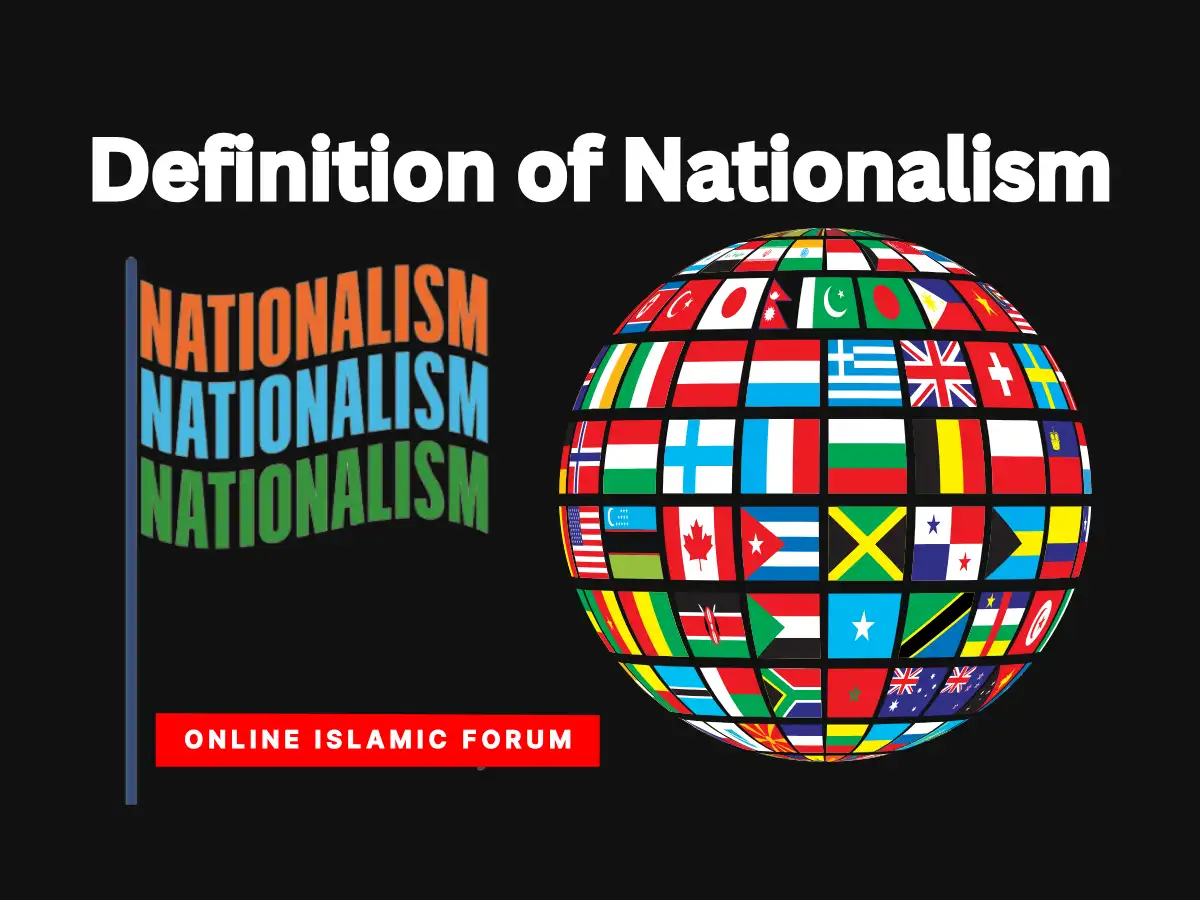

The definition of nationalism is something most people think they understand — but rarely examine closely. It is the belief that one’s nation, ethnic group, or homeland deserves primary loyalty and pride. Sounds simple. But for Muslims living in the UK, USA, or anywhere in the world, this idea creates a real tension.
Definition of Nationalism: Many Muslims feel pulled in two directions. On one side, there’s love for the country they were born in or now call home. On the other hand, there’s Islam — a faith that sees all believers as one Ummah, united beyond borders, languages, and ethnicity. So which identity wins?
This article breaks it down honestly. We look at what nationalism means, where it crosses the line for Muslims, and what the Qur’an and Sunnah actually say about it.
Want to explore this topic deeper? Browse highly rated books on Nationalism and Islamic Political Identity on Amazon — an excellent starting point for UK and US Muslim readers seeking scholarly depth.
What Is Nationalism?:
According to Wikipedia, nationalism is a political ideology that holds that a nation — defined by shared culture, language, history, or ethnicity — should be self-governing and that its interests should be prioritised above those of other nations.
In simple terms, Nationalism means putting your nation first. It’s the idea that “my people” matter more, and that group identity should shape politics, culture, and loyalty.
Britannica describes it as one of the most powerful political forces in modern history — responsible both for liberation movements and devastating wars.
Types of Nationalism:
Type Description Islamic Concern?
Civic Nationalism Loyalty based on shared citizenship and values Moderate — can coexist with Islamic values
Ethnic Nationalism Loyalty based on race, blood, or ancestry. Problematic — contradicts the Islamic Brotherhood
Religious Nationalism Faith used to define national identity. Complex — can become exclusionary
Cultural Nationalism Pride in shared language, art, and history. Acceptable if not used to divide Muslims
Pan-nationalism: Unity of a broader group (e.g., Arab nationalism), concerning whether it replaces Islamic unity
Definition of Nationalism: What the Qur’an Says
Islam does not deny that people belong to different nations and tribes. But it firmly places taqwa (God-consciousness) above every other identity marker. Here are two powerful verses:
يَا أَيُّهَا النَّاسُ إِنَّا خَلَقْنَاكُم مِّن ذَكَرٍ وَأُنثَىٰ وَجَعَلْنَاكُمْ شُعُوبًا وَقَبَائِلَ لِتَعَارَفُوا ۚ إِنَّ أَكْرَمَكُمْ عِندَ اللَّهِ أَتْقَاكُمْ
Yā ayyuhan-nāsu innā khalaqnākum min dhakarin wa unthā wa ja’alnākum shu’ūban wa qabā’ila lita’ārafū — inna akramakum ‘indallāhi atqākum. Surah Al-Hujurat (49:13)
This verse is the Qur’an’s direct answer to tribal and national pride. Diversity is real — but it’s for recognition, not superiority. No race, nation, or language group earns honour except through righteousness.
وَاعْتَصِمُوا بِحَبْلِ اللَّهِ جَمِيعًا وَلَا تَفَرَّقُوا
Wa’taṣimū bihablillāhi jamī’an wa lā tafarraqū
This verse is a direct warning against division, which is the natural outcome of extreme nationalism. When nation-first thinking splits the Muslim community, it contradicts this Qur’anic command.
What the Prophet ﷺ Said
Sahih al-Bukhari — Hadith 3167
دَعُوهَا فَإِنَّهَا مُنْتِنَةٌ
Da’ūhā fa-innahā muntinah
When the Prophet ﷺ heard a man calling for tribal solidarity (asabiyyah), he said: “Leave it — it is rotten.” This shows how strongly Islam opposes blind group loyalty built on pride of birth or lineage.
Why Understanding Nationalism Matters for Muslims
For Muslims in the UK and the USA, understanding the definition of nationalism is not just an academic exercise. It’s a daily reality. Here’s why it matters:
Identity clarity: Knowing where Islam stands helps you navigate political debates without losing your values.
Community strength: Avoiding tribal or national divisions keeps the local Muslim community united.
Civic engagement: You can be a proud citizen and a proud Muslim — as long as neither cancels the other out.
Avoiding extremes: Both hyper-nationalism and denial of any local roots are problematic. Balance is the Islamic way.
Moral grounding: Understanding this topic protects you from being used by political movements that exploit religious or national identity.
Key Insight: Loving your country is permissible in Islam. Putting your country above Allah’s law, above Muslim brotherhood, or above justice — that is where it becomes a problem.
Islamic scholars have long distinguished between acceptable patriotism and condemned asabiyyah (blind group loyalty). Here’s how they see it:
Concept Islamic View Permissible?
Love for your homeland, Natural emotion — acceptable ✅ Yes
Protecting your nation Allowed if done justly ✅ Yes
Ethnic or racial superiority is directly forbidden — this is asabiyyah ❌ No
Dividing Muslims by nationality is condemned in the Qur’an and Sunnah ❌ No
Prioritising national law over Shariah requires careful fiqh analysis ⚠️ Context-dependent
For a broader scholarly discussion on this topic from an Islamic educational perspective, visit About Islam’s article on nationalism and Islamic identity.
Want to discuss this with other Muslims? Join the community conversation at www.onlineislamicforum.com — a great space for UK and US Muslims to share perspectives on identity, faith, and modern life.
Relevant Hanafi Fiqh Books for Further Study
These titles are commonly found in Islamic libraries and archives. Search for PDF versions through your local library or reputable Islamic digital archives.
Al-Hidayah fi Sharh Bidayat al-Mubtadi — Imam al-Marghinani
Radd al-Muhtar ‘ala al-Durr al-Mukhtar — Ibn Abidin
Al-Mabsut — Imam al-Sarakhsi
Kitab al-Asl (Al-Mabsut of Muhammad al-Shaybani)
Fatawa Hindiyyah (al-Fatawa al-Alamgiriyyah)
A Practical Checklist for Muslim Citizens
How do you live in the UK or the USA as a proud Muslim without falling into the trap of problematic nationalism? Use this simple checklist:
✅ Know your Islamic identity first — you are a Muslim before you are British, American, Pakistani, Arab, or anything else.
✅ Engage in civic life — vote, volunteer, contribute — but hold Islamic ethics as your compass.
✅ Reject racial or ethnic pride that puts one group above others.
✅ Love your country of residence — it is not haram to feel attachment to where you live.
✅ Stand against injustice — even when it benefits your own nation or group.
✅ Build bridges with fellow Muslims across nationalities — Ummah unity is not optional.
✅ Educate your children on both their Islamic identity and responsible citizenship.
Reminder: The Prophet ﷺ was from the Quraysh, spoke Arabic, and loved Makkah deeply — yet his message, his community, and his justice were universal. That is the model.
What Is Nationalism?
What Is Nationalism? It is the idea that a group sharing a common identity — language, culture, religion, ethnicity, or history — forms a “nation” with special rights to self-determination and collective loyalty. In political science, it ranges from benign civic pride to aggressive exclusion of “outsiders.”
For Muslims, the honest answer is: loving your people and your land is fine. Making that love a source of arrogance, division, or injustice is not. As the scholars at IslamWeb explain, the Islamic concept of community transcends all national boundaries.
Conclusion:
The definition of nationalism is not one-size-fits-all — and Islam does not treat it as such. You are allowed to love your land, your culture, and your community. What you cannot do is let that love breed arrogance, division, or injustice. The Qur’an created nations so we could know one another — not to rank one above another. The Sunnah reminded us that Allah sees your heart, not your passport. Hold your identity lightly, hold your taqwa firmly, and walk forward as a Muslim first in every country you call home.
Frequently Asked Questions:
Is nationalism allowed in Islam?
Moderate patriotism — loving your country — is acceptable. Extreme nationalism that promotes racial pride or divides Muslims is forbidden as a form of asabiyyah.
What is the Islamic definition of nationalism?
Islam distinguishes between natural belonging to a community and sinful tribal pride. Group loyalty becomes haram when it overrides justice or Islamic brotherhood.
Can a Muslim be proud of their country?
Yes — as long as that pride doesn’t conflict with Islamic values, divine law, or fairness towards others. Pride rooted in good deeds is praised; pride based on race is condemned.
What did the Prophet ﷺ say about nationalism?
He condemned asabiyyah (blind group loyalty based on lineage or ethnicity) and declared all Muslims equal regardless of race, colour, or national origin.
How should Muslims in the UK and the USA handle national identity?
By being engaged, law-abiding citizens, while keeping Islamic ethics primary. National identity and Muslim identity can coexist — neither should erase the other.
Recommended For You:
- Can A Muslim Marry A Christian?
- Can I Divorce My Wife For Not Sleeping With Me?
- Can I Kiss My Wife’s Private Parts in Christianity?
- A Continuous Charity: A Lasting Gift of Sadaqah
- Meaning 786 in Islam: Origins, Importance, and Guidance
- Allah Doesn’t Burden A Soul Beyond That It Can Bear
- Adoption in Islam: Muslim Needs to Know
- Tattoos Are Haram: The Islamic Perspective
- Major Sins in Islam