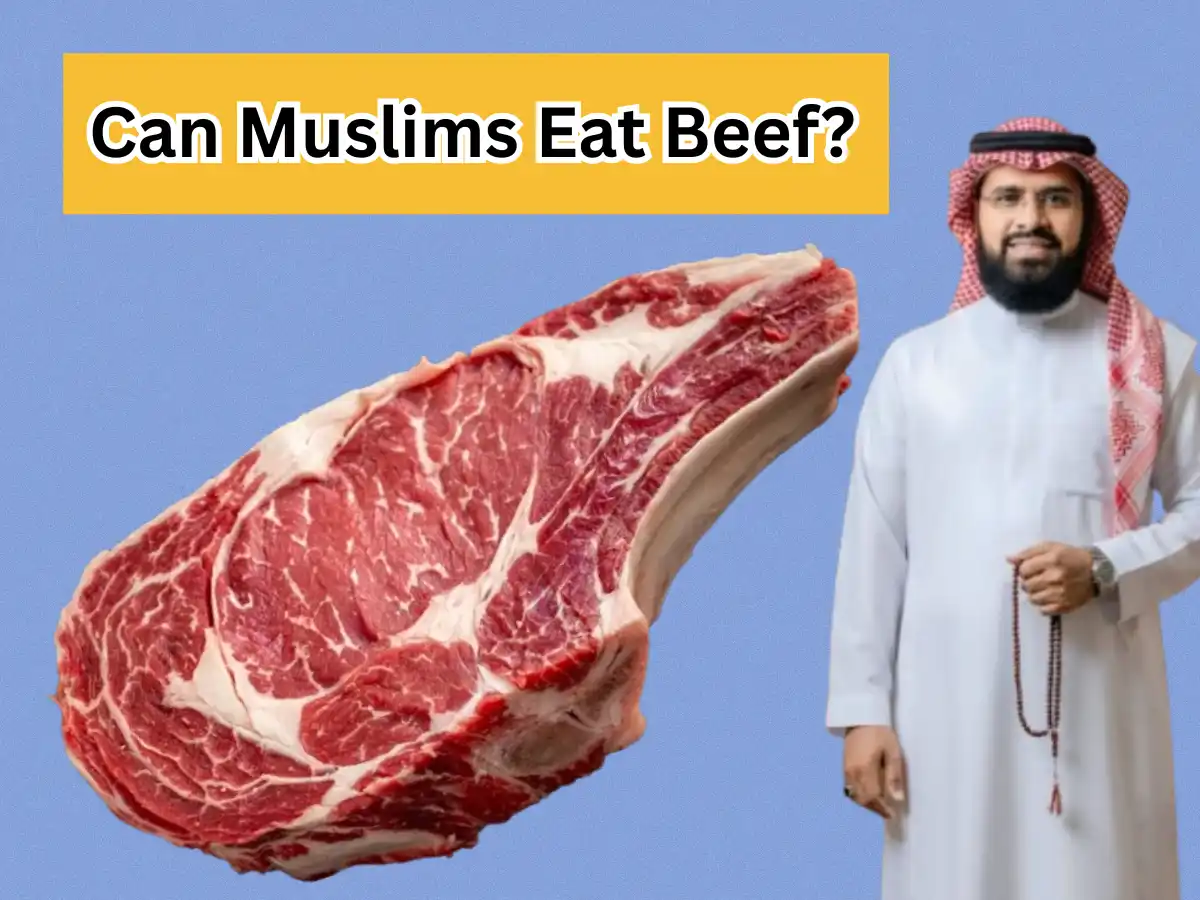

Can Muslims eat beef? It’s one of the most searched food questions among Muslims living in the West. Many new Muslims, students abroad, or families dining out genuinely wonder about this. The short answer is yes — beef is permissible in Islam. But permissibility depends on conditions: how the animal was slaughtered, what was said at the time, and whether the meat was prepared without impermissible additives.
Unlike pork, which is clearly prohibited in Islam, beef sits in a different category. It is mentioned positively in Islamic scripture. Still, confusion arises — especially around terms like halal, zabiha, and machine-slaughtered meat. This article clears all of that up, step by step.
RECOMMENDED READING ON AMAZON: The Lawful and the Prohibited in Islam — Yusuf Al-Qaradawi
A foundational reference for understanding halal food rulings, including beef, according to Shariah principles.
What Does Islam Say About Beef?
Can Muslims Eat Beef? Beef in Islam falls under the category of halal meat — meaning it is lawful to consume, as long as proper Islamic slaughter conditions are met. The cow is not a forbidden animal. In fact, according to Islamic dietary laws, cattle are among the animals explicitly permitted for Muslims.
Eating beef is permitted in Islam when three core conditions are satisfied:
1. The animal must be alive and healthy at the time of slaughter.
2. The name of Allah (God) must be pronounced — “Bismillah, Allahu Akbar.”
3. The animal’s throat must be cut swiftly, severing the jugular veins.
If these conditions are not met — for instance, if the animal was stunned to death before slaughter, or if the name of Allah was not said — the meat is considered haram (forbidden). This is why simply buying any beef at a supermarket is not automatically halal for a Muslim.
Qur’an References on Beef
The Qur’an is direct and clear about which foods are allowed and which are not. Here are two relevant verses:
QUR’AN — SURAH AL-MA’IDAH (5:1)
Transliteration: “Uhillat lakum bahimatul an’aam…”
Translation: “Lawful to you are the animals of the grazing livestock, except for what will be recited to you…” — Al-Ma’idah 5:1
Read Surah Al-Ma’idah 5:1 on Quran.com
QUR’AN — SURAH AL-AN’AM (6:145)
Transliteration: “Qul laa ajidu fi maa uhiya ilayya muharraman…”
Translation: “Say: I find not in what has been revealed to me anything forbidden to one who wishes to eat, except carrion, blood, or the flesh of swine…” — Al-An’am 6:145
Read Surah Al-An’am 6:145 on Quran.com
Both verses confirm that cattle — including cows — are permitted. The only forbidden meats are carrion, flowing blood, pork, and meat slaughtered without Allah’s name. Properly slaughtered beef meets all of these conditions.
Hadith References on Halal Slaughter
The Prophet Muhammad ﷺ provided detailed guidance on how to make meat permissible. Below are two relevant hadith:
SAHIH AL-BUKHARI — HADITH 5498
The Prophet ﷺ said: “Whatever is used for slaughtering and causes blood to flow, and the name of Allah is mentioned, eat it.” He excluded the use of teeth and nails.
Read this hadith on proper slaughter at Sunnah.com
SAHIH MUSLIM — HADITH 1960
The Prophet ﷺ emphasized mercy in slaughter: “When you slaughter, do so in the best way. Let one of you sharpen his blade and put the animal at ease.”
Read this hadith on humane slaughter at Sunnah.com
Is Beef Prohibited in Islam? Understanding the Misconceptions
Some people confuse Islamic rules with Hindu or other cultural restrictions on beef. In Hinduism, the cow is considered sacred, and beef is not eaten. But in Islam, there is no sanctity given to the cow. As Britannica notes in its overview of dietary laws, Islamic rules focus on the method of slaughter, not the species itself.
There is no verse in the Qur’an and no authentic hadith that prohibits beef. On the contrary, the companions of the Prophet ﷺ regularly consumed beef. The key question is always: was it slaughtered correctly?
Beef is prohibited in Islam only in these specific cases:
- The animal died of natural causes (carrion).
- It was slaughtered without saying, Bismillah.
- It was slaughtered in the name of something other than Allah.
- The meat contains haram additives (e.g., alcohol-based marinades).
- The animal was already dead at the time of slaughter.
Curious about more halal food questions? Join the conversation at Online Islamic Forum — a great space for Muslims to discuss fiqh issues in everyday life.
Benefits of Eating Halal Beef
Beyond religious compliance, eating halal-slaughtered beef properly carries several benefits — spiritual, physical, and ethical.
- Spiritually clean — you eat with full certainty that it is permissible.
- Healthier — halal slaughter drains blood, reducing bacterial risk.
- Ethically sound — the animal must be treated with care and not stressed.
- Communally strengthening — buying from halal butchers supports Muslim businesses.
- Nutritious — beef is rich in protein, iron, zinc, and B vitamins.
About Islam highlights how halal eating integrates physical health with spiritual mindfulness — a holistic approach that modern nutrition science increasingly supports.
Quick Reference: Beef Permissibility at a Glance
Situation Halal? Reason
Zabiha beef from a Muslim butcher ✔ Yes Slaughtered per Islamic method with Bismillah
Beef from a Kosher Jewish source ✔ Permitted (scholarly debate) Ahlul Kitaab slaughter — majority Hanafi view allows it
Supermarket beef (non-zabiha) ✘ Avoid No guarantee of Islamic slaughter conditions
Machine-slaughtered beef ✘ Debated Hanafi scholars generally consider it impermissible
Beef with alcohol-based marinade ✘ No Haram additive makes it impermissible
Beef from dead (non-slaughtered) cow ✘ No Carrion is explicitly forbidden in Qur’an
Beef at a certified halal restaurant ✔ Yes Assumes proper certification and oversight
Hanafi Fiqh Perspective on Beef
The Hanafi school of Islamic jurisprudence — the most widely followed madhab in the UK and USA among South Asian Muslim communities — has a detailed framework for halal meat. In the Hanafi view:
- Saying “Bismillah” is obligatory, not optional. If omitted intentionally, the meat is haram.
- Machine slaughter is generally not accepted unless a human manually says Bismillah for each cut.
- Beef from People of the Book (Jews and Christians) is permissible if slaughtered according to their religious rites — though many scholars now question this due to modern commercial practices.
Recommended Hanafi Fiqh Books (Available in Libraries & Islamic Archives)
- Radd al-Muhtar ala al-Durr al-Mukhtar — Ibn Abidin
- Al-Ikhtiyar li-Ta’lil al-Mukhtar — Ibn Mawdud al-Musili
- Fatawa Hindiyyah (Al-Fatawa al-Alamgiriyyah)
- Al-Hidayah — Burhan al-Din al-Marghinani
- Fath al-Qadir — Ibn al-Humam
Practical Checklist: How to Ensure Your Beef Is Halal
Muslims in the UK and the USA often shop in supermarkets or dine out. Here is a simple checklist to keep your beef consumption halal:
- Buy from a certified halal butcher with a visible halal certificate.
- Look for the HMC (Halal Monitoring Committee) or HFA certification in the UK.
- Ask restaurants explicitly: “Is your beef hand-slaughtered zabiha?”
- Avoid beef that contains wine, beer, or alcohol in the ingredient list.
- When in doubt, leave it out — the Prophet ﷺ advised leaving the doubtful.
Can Muslims eat beef from any restaurant? Not automatically. Always ask and verify before ordering.
A Note for Muslims Living in the West
For Muslims in the UK, USA, and Canada, finding halal beef is easier today than ever. Most major cities have dedicated halal butchers, and many supermarkets now stock certified halal products. The challenge is staying vigilant about certification and avoiding complacency.
The Islamic Fiqh Academy and scholars globally continue to refine guidance on modern slaughter technologies. The key takeaway: when the conditions of Islamic slaughter are properly met, eating beef is fully permitted in Islam and carries no sin whatsoever.
For those who want to explore this topic further from a scholarly angle, IslamQA.org has a detailed fatwa section covering halal meat questions — including beef-specific rulings for modern contexts.
Final Thoughts
Beef is a wholesome, nutritious food that Islam fully permits — and has always permitted. The question is never what you eat, but how it was prepared. When beef meets the conditions of Islamic slaughter, it is clean, lawful, and blessed.
Whether you are a new Muslim figuring out halal dining, a UK family shopping at the butcher, or an American Muslim navigating restaurant menus, the path is clear. Seek certified halal beef, say Bismillah before you eat, and enjoy it with full peace of mind.
May Allah make our food pure, our hearts grateful, and our lives full of barakah. Ameen.
Frequently Asked Questions
Is beef halal for Muslims to eat?
Yes. Beef is halal in Islam as long as it is slaughtered correctly — with Bismillah, by a Muslim, using the proper Islamic method.
Can Muslims eat beef burgers from fast food chains?
Only if the restaurant is halal-certified. Many fast food chains in the UK and the USA now offer certified halal options — always verify before ordering.
Is machine-slaughtered beef halal according to Islam?
This is debated. Hanafi scholars generally do not accept machine slaughter. Hand-slaughtered zabiha beef is the safer and more widely accepted option.
Is beef from a non-Muslim supermarket halal?
Not automatically. Regular supermarket beef is not zabiha. It may have been stunned or slaughtered without Bismillah, making it impermissible for most Muslims.
Why do some people think beef is prohibited in Islam?
This is a cultural misconception, often confused with Hindu dietary rules. Islam has no prohibition on beef. The Qur’an explicitly permits it when slaughtered correctly.
Recommended For You:
- Can A Muslim Marry A Christian?
- Can I Divorce My Wife For Not Sleeping With Me?
- Can I Kiss My Wife Private Parts in Christianity?
- A Continuous Charity: A Lasting Gift of Sadaqah
- Meaning 786 in Islam: Origins, Importance, and Guidance
- Allah Doesn’t Burden A Soul Beyond That It Can Bear
- Adoption in Islam: Muslim Needs to Know
- Tattoos Are Haram: The Islamic Perspective
- Major Sins in Islam