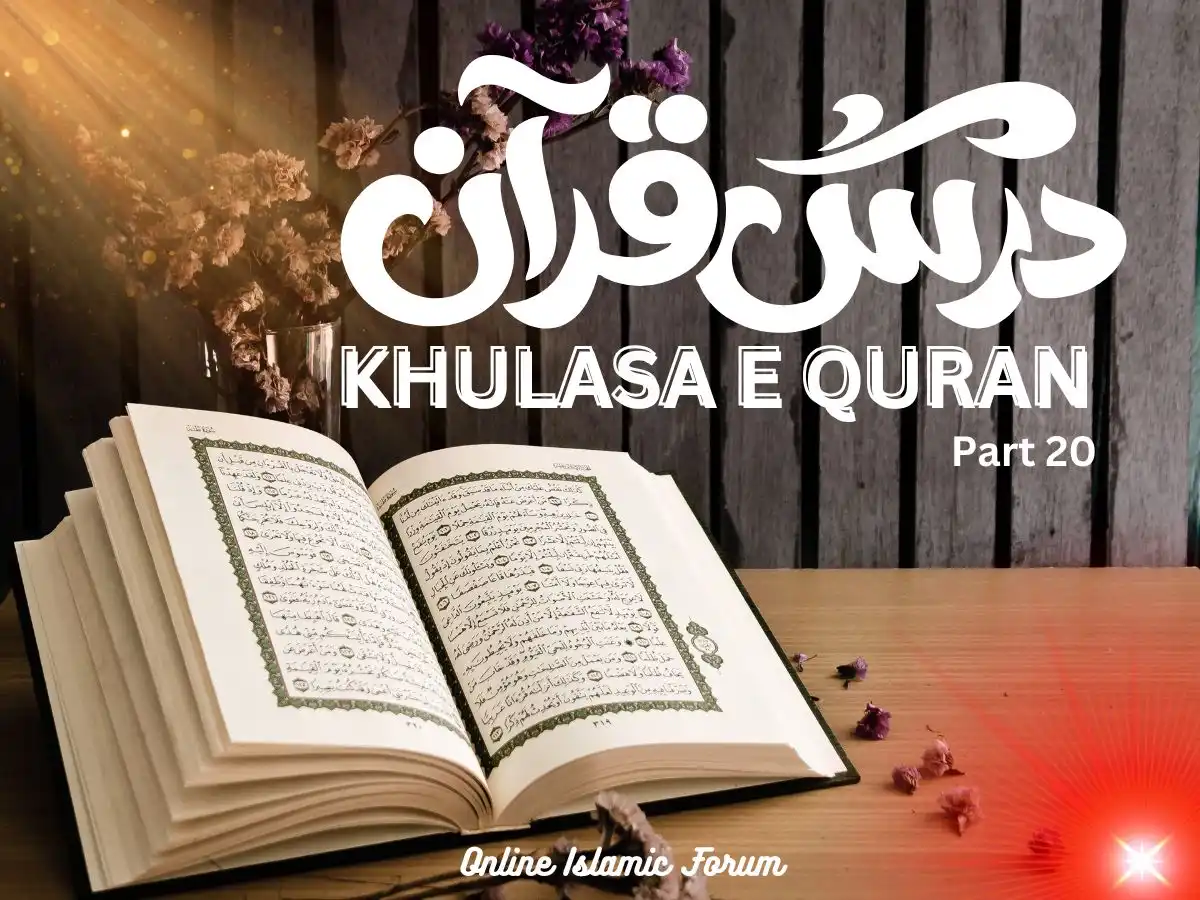

This essay aims to clarify Khulasa-e-Quran: Exploring Surah Al-Maidah(Verses 36-80). Verse 36 indicates that even if an individual were to have all the riches on earth and then double it, using it as a ransom to save themselves, it would still fall short of ensuring the salvation of a non-believer on the Day of Judgment.
Verse 38 mandates that thieves, regardless of gender, face the penalty of having their hand cut off as retribution for their offense and a warning to others. Nonetheless, if they turn back and change their ways, Allah is Most Forgiving and Compassionate.
Allah’s Supreme Authority and Justice (Verse 40)
Verse 40 emphasizes Allah’s complete dominion over the universe, His ability to either punish or pardon, and his ultimate authority over everything that exists. Allah directs the Prophet Muhammad (peace be upon him) that when individuals present disputes to him, he can choose to either adjudicate or refrain, yet if he opts to make a judgment, he must ensure it is done with equity and fairness.
Khulasa-e-Quran: Exploring Surah Al-Maidah (Verses 36-80) assists us in summarizing the Holy Quran. Verses 44 to 47 highlight that those who fail to judge by Allah’s revealed laws are considered disbelievers, wrongdoers, and transgressors.
Verse 45 presents the concept of retribution (Qisas), declaring that life must be compensated with life, an eye for an eye, a nose for a nose, an ear for an ear, a tooth for a tooth, and injuries must be met with proportional response.
Nonetheless, if a person voluntarily chooses to renounce revenge and genuinely regrets their actions, it acts as a penance for their wrongdoing.
Diversity in Divine Laws and Human Choice (Verses 49-50)
Verses 49-50 explain that Allah has ordained a distinct law and way of life for every community. Had He willed, He could have made all people a single nation, but He granted them the freedom to choose between truth and falsehood, which serves as a test of their character
Verse 51 cautions Muslims about befriending Jews and Christians, as they unite in opposition to Muslims. Those who make friends with them are considered part of them.
Verse 57 recommends avoiding friendships with those from the People of the Book who ridicule religion or continue in their disbelief.
In verse 60, Allah proclaims that the greatest punishment is set aside for those He has damned, those who have incurred His anger, served Satan, and whose appearances were changed into monkeys and pigs due to their defiance.
Verses 73 to 80 challenge the mistaken beliefs of Christians, especially their doctrine of the Trinity, asserting that Allah is One and has no associates.
It explains that Jesus, the son of Mary, was a prophet similar to those who came before him, and his mother, Mary, was a virtuous woman.
These lines highlight Allah’s unity and dismiss any partnerships with Him, reinforcing the fundamental principle of Islamic monotheism.
In this article, we have explored Khulasa-e-Quran: Exploring in Surah Al-Maidah (Verses 36-80), thus every Muslim should read the Holy Quran and its translation.
Recommended For You:
- khulasa e Quran (Surah Al-Baqarah Ayat 234-286)
- khulasa e Quran (Surah Al-Imram Ayat 1-34)
- khulasa e Quran (Surah Al-Imram Ayat 35-76)
- khulasa e Quran (Surah Al-Imram Ayat 77-88)
- khulasa e Quran (Surah Al-Imran Ayat 90-134
- khulasa e Quran (Surah Al-Imram Ayat 135-190) Part 12
- khulasa e Quran (Surah An-Nisa Ayat 1-23
- khulasa e Quran (Surah An-Nisa Ayat 24-37)
- khulasa e Quran (Surah An-Nisa Ayat 38-76)
- khulasa e Quran (Surah An-Nisa Ayat 86-95)
FAQS:
- What are the key themes discussed in Surah Al-Maidah (Verses 36-80)?
The verses cover themes such as divine justice, the consequences of disbelief, the punishment for theft, the principle of Revenge (Qisas), the importance of judging with fairness, warnings against befriending disbelievers, and critiques of incorrect beliefs like the Trinity. - What is the significance of the punishment for theft mentioned in these verses?
The punishment of cutting off the hand for theft serves as a Restriction(Prohibition) and a lesson for society. However, The Holy Quran also emphasizes forgiveness and reform for those who sincerely Apologize and correct their behavior. - How does the Quran address the concept of Revenge (Qisas) in these verses?
The Holy Quran introduces the principle of Qisas, stating that crimes like murder or physical harm should be met with equal retribution (e.g., life for life, eye for eye). However, it also encourages forgiveness and reconciliation, which can serve as expiation for sins. - What does the Quran say about forming alliances with non-Muslims in these verses?
The Holy Quran advises Muslims against Developing close relationships with Jews and Christians who oppose Islam, as they may support one another against Muslims. It warns that those who befriend such groups will be counted among them, Focusing on the importance of loyalty to the Muslim community.