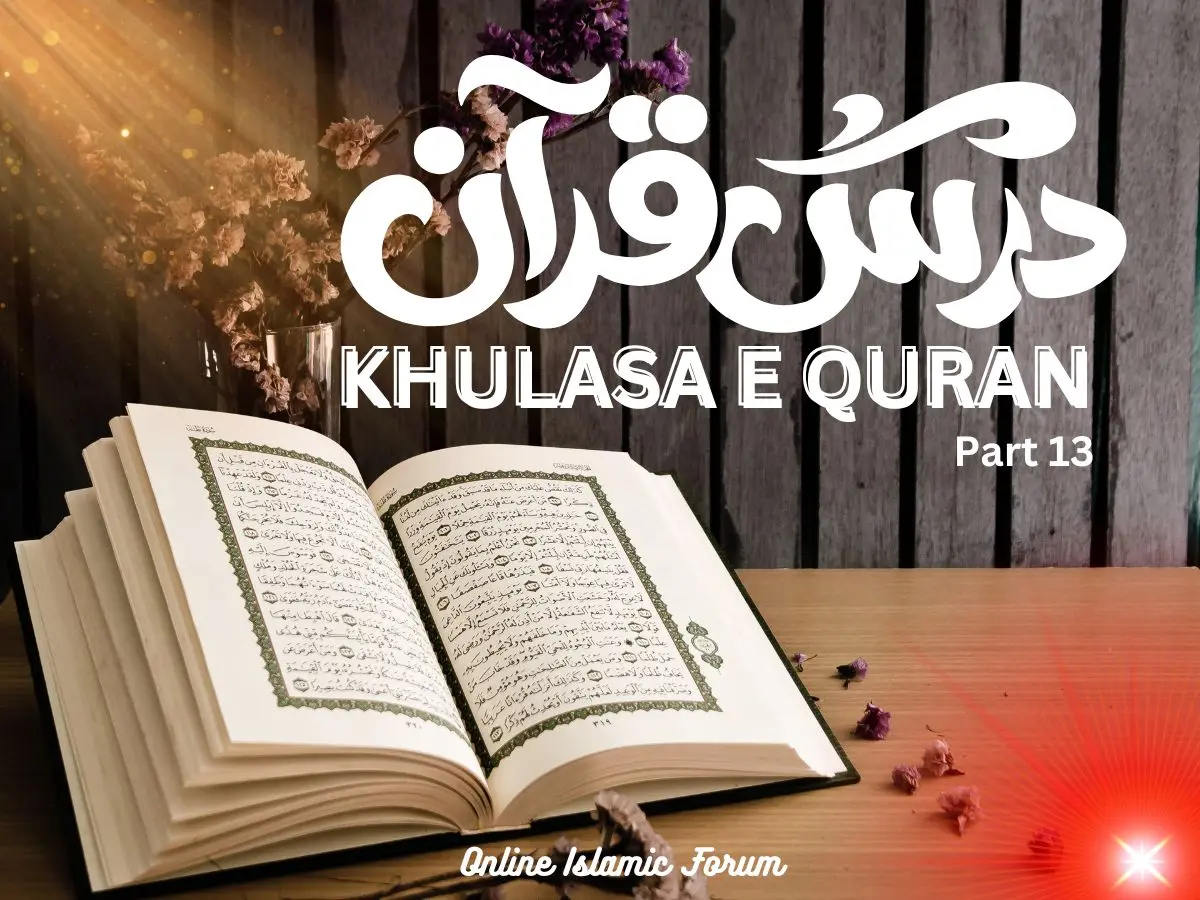

In the Holy Quran, Surah An-Nisa holds the position of the fourth surah. In this article, we will attempt to understand the khulasa e Quran (Surah An-Nisa Ayat 1-23. Surah An-Nisa beautifully outlines the rights of women in an excellent manner. In this article, we will study the khulasa e Quran (Surah An-Nisa Ayat 1-23). The first 23 verses of Surah An-Nisa are discussed here.
In the opening verse, Allah commands: “O mankind! Fear your Lord, who created you from a single soul and from it created its spouse (Hawwa), and then spread countless men and women throughout the earth.” This verse emphasizes that all of humanity originates from a common source.
Following this, Allah warns against consuming the wealth of orphans by merging it with one’s own wealth, declaring it a grave sin. Similarly, it is forbidden to replace their good assets with inferior ones. It is essential for every Muslims, he should must study khulasa e Quran (Surah An-Nisa Ayat 1-23).
The next verse states that, if necessary, a man is permitted to marry up to four wives, but only under the strict condition of maintaining absolute justice among them.
Regarding orphaned children under one’s care, Allah instructs that if they are not yet mature enough to manage their wealth, their guardians must safeguard it, provide for their needs, and treat them with kindness.
In khulasa e Quran (Surah An-Nisa Ayat 1-23), there are some important topics, lets study these topics one by one.
The orphan’s wealth should only be handed over when they reach maturity and sound judgment. Additionally, guardians are warned not to hastily consume an orphan’s wealth out of fear that they will later demand their rightful share. When transferring their wealth, it is advised to appoint witnesses as a precaution.
The Quran also instructs that if a guardian is financially secure, they must not use an orphan’s wealth for personal expenses. However, if they are in need, they may use only a minimal amount to fulfill essential requirements.
Furthermore, Islam upholds the inheritance rights of both men and women, ensuring that women are not deprived of their rightful shares. The detailed laws of inheritance are outlined in verses 11 and 12 of Surah An-Nisa.
In verses 16 and 17, the principle of repentance is explained: if a person commits a sin and sincerely repents without delay, their repentance is accepted by the mercy of Allah.
However, those who persist in wrongdoing throughout their lives and only seek forgiveness when death approaches have no assurance of their repentance being accepted. Likewise, those who die in a state of disbelief have no guarantee of salvation in the Hereafter.
Allah also commands that the dowry (mahr) agreed upon in marriage must be paid in full, whether it is small or large.
Additionally, a hadith states that women who are prohibited for marriage due to blood relations are also prohibited through nursing (foster relationships). This ruling is reaffirmed in verse 23 of Surah An-Nisa.
Recommended For You: