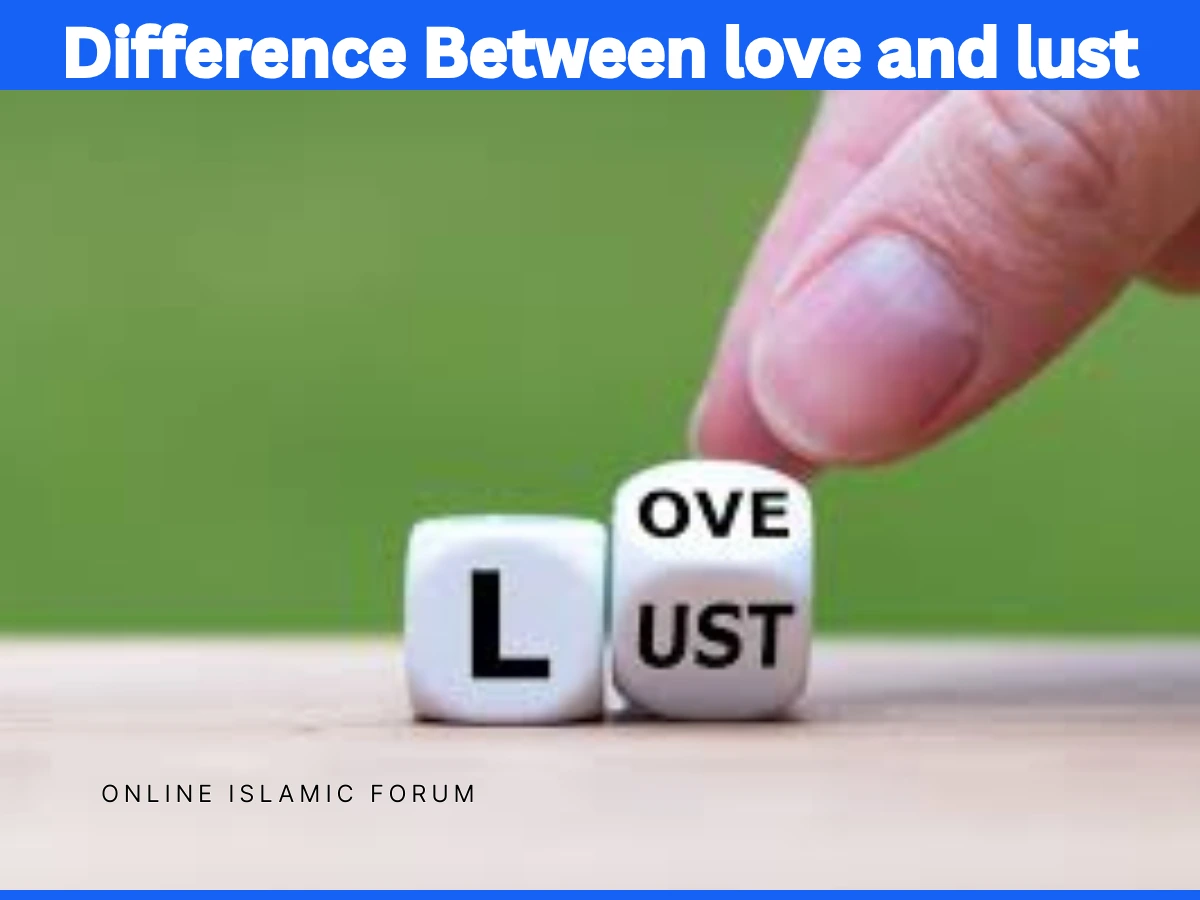

The question is, what is the difference between love and lust? It can feel confusing. Many people struggle to tell the difference between love and lust, especially when emotions run high. In the first flush of a new relationship, the heart and mind often send mixed signals. This confusion is a common problem, particularly among Muslims navigating modern life while trying to follow Islamic principles. The key insight is that Islam offers a clear framework to distinguish between a fleeting, selfish desire and a deep, committed, and sacred bond.
The Problem: When Feelings Get Mixed Up:
Imagine a fire that starts quickly, burns very brightly, but dies out just as fast. That is often lust. It’s a powerful force. But it lacks roots and true warmth. True love, on the other hand, is like a steady, gentle flame. It may not always be dramatic, but it provides lasting warmth, security, and light. The challenge lies in not mistaking the intense heat of lust for the enduring glow of love.
The Islamic Insight: What the Qur’an and Sunnah Teach
Allah (SWT) has given us a beautiful guide to understand these emotions. In the Holy Qur’an, Allah describes the sacred bond of marriage, which is the only rightful vessel for love.
Qur’an Verse 1 (Alim.org Link):
Surah Ar-Rum (30:21)
“And of His signs is that He created for you from yourselves mates that you may find tranquility in them; and He placed between you affection and mercy.”
This verse highlights three amazing things: tranquility (sakinah), affection (mawaddah), and mercy (rahmah). These are the real pillars of love.
But what does Allah say about following our base desires? The Qur’an also warns us about lust.
The Prophet Muhammad (peace be upon him) also taught us about the nature of love and the dangers of unchecked desire.
Sunan Abi Dawud 5125
The Prophet (ﷺ) advised a companion to tell another, “I love you for Allah’s sake.” The other man replied, “May He for Whose sake you love me, love you!”
Hadith 2 (Sunnah.com Link):
Jami` at-Tirmidhi 3535
The Prophet (ﷺ) said, “A man is with whomever he loves.”
The Benefits of Knowing the Difference
Understanding the difference between love and lust isn’t just an academic exercise. It’s a vital skill for your emotional and spiritual health. When you can tell them apart, you protect yourself from heartbreak. You also avoid falling into sin. You build relationships that are halal and blessed by Allah. You choose a partner based on character and faith, not just a temporary feeling. This leads to a stable, happy family life. It also brings you closer to Allah because your actions are guided by purity, not selfish desire.
How to Tell the Difference Between Lust and Love (Actionable Tips)
You can use this simple checklist to test your feelings:
Check Your Intentions. Ask yourself: “Do I want what’s best for this person in this life and the next?” Or is my focus mostly on what I can get from them?
Examine Your Actions. Does this feeling lead you to do things that please Allah (like praying for them or proposing marriage)? Or does it lead you towards secrecy and haram actions?
Look at the Long Term. Can you see this person as your partner during both happy times and difficult times? Or does the feeling fade when physical attraction is not the main focus?
Seek Advice. Ask a trusted, pious friend or a scholar. They can give you an honest, outside perspective that your emotions might be hiding.
The Role of Marriage in Islam
It’s important to remember that Islam doesn’t deny sexual feelings. These feelings are natural. But they have a proper place. The only rightful and pure channel for them is within the sacred contract of marriage (Nikah). There’s a difference between love and lust, and marriage is the institution that elevates love and controls lust. It transforms a physical drive into an act of worship, care, and family building.
Recommended Hanafi Fiqh Books
For deeper study, you can look for these titles in Islamic libraries or online archives. They provide classical Islamic guidance on family and personal conduct.
Al-Hidayah by Burhan al-Din al-Marghinani
Radd al-Muhtar ‘ala al-Durr al-Mukhtar (also known as Hashiyah Ibn Abidin) by Ibn Abidin
Mukhtasar al-Quduri by Abu al-Hasan al-Quduri
A Note on Learning
For more practical advice and community discussions, you can visit the Online Islamic Forum. It’s a great place to connect with other Muslims and learn from their real-life experiences.
Conclusion:
So, what is the difference between love and lust? It’s the difference between a deep river and a flash flood. One brings life and stability. The other brings chaos and destruction. Don’t let your heart be fooled by the heat of a moment. Anchor your feelings in the cool shade of Islamic guidance. Seek the kind of love that is pure, honest, and for the sake of Allah. A love that brings you peace in this world and a high place in Jannah. Choose the slow, steady, and blessed path. Your heart will thank you for it in the long run.
FAQ:
How can I know for sure if my feelings are love or just attraction?
Look at your intentions. Love is patient and selfless. Lust is impatient and selfish. Check if your feelings encourage good deeds or bad ones.
Can lust ever turn into real love in Islam?
Yes, sometimes it can. But this is only possible and halal within the commitment of marriage. Outside marriage, it’s dangerous.
Is it haram to feel physical attraction before marriage?
No, feeling attraction is natural. What’s haram is acting on it in a forbidden way or letting it control you.
Why does Islam restrict feelings of love and lust?
Islam doesn’t restrict true love. It guides it. It channels natural desires into marriage to create stable families and protect society from harm.
What should I do if I am confused about my feelings for someone?
Stop. Take a step back. Lower your gaze. Pray Salat al-Istikhara. Seek advice from wise people. Do not be alone with that person.
Recommended For You:
- Can A Muslim Marry A Christian?
- Can I Divorce My Wife For Not Sleeping With Me?
- Can I Kiss My Wife’s Private Parts in Christianity?
- A Continuous Charity: A Lasting Gift of Sadaqah
- Meaning 786 in Islam: Origins, Importance, and Guidance
- Allah Doesn’t Burden A Soul Beyond That It Can Bear
- Adoption in Islam: Muslim Needs to Know
- Tattoos Are Haram: The Islamic Perspective
- Major Sins in Islam