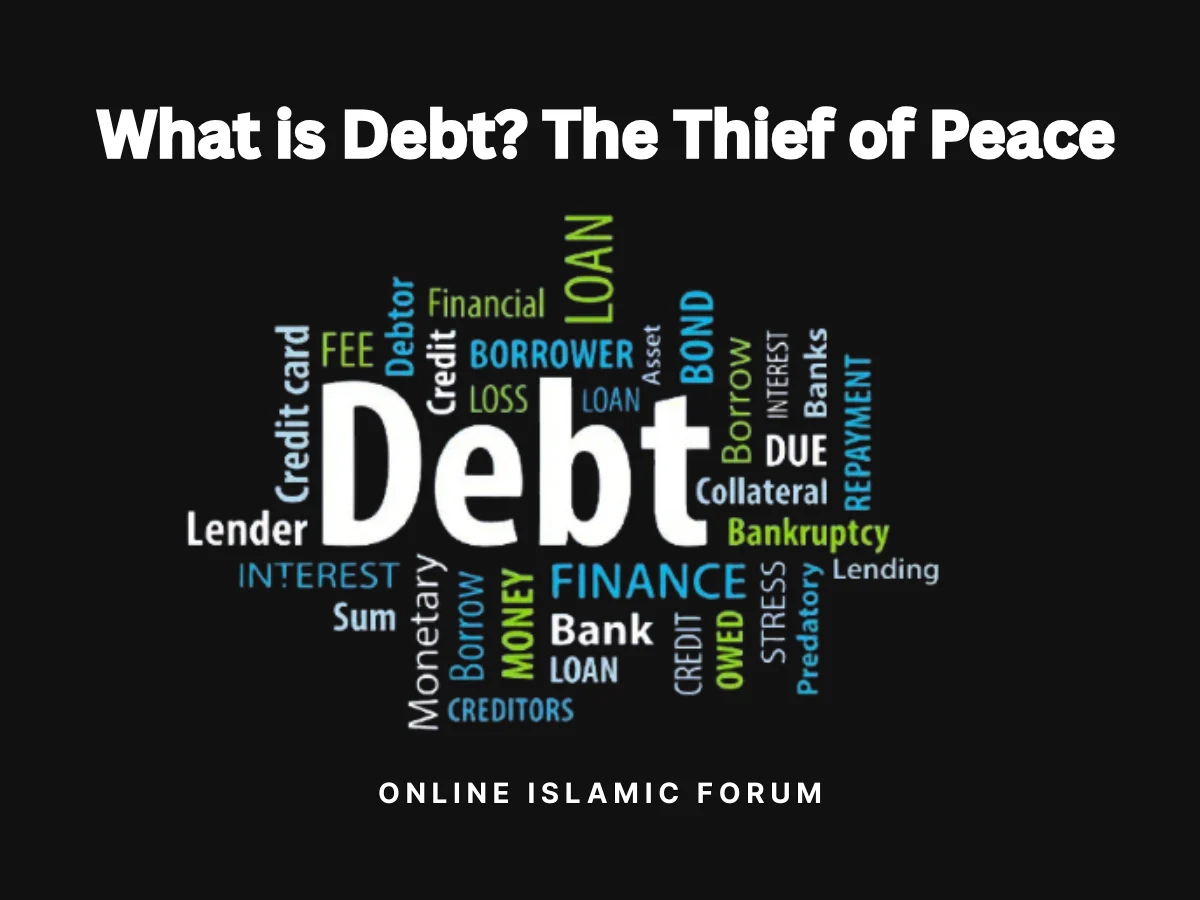

What is debt? At its simplest, debt is money, or something of value, that one person borrows from another, with a promise to return it. It sounds straightforward. But for Muslims living in the UK or the USA, debt comes with deeper questions: Is it permissible? What does Islam say? How serious is the obligation to repay?
These are real concerns that thousands of Muslims face every day — from student loans and mortgages to credit cards and personal borrowing. According to Encyclopaedia Britannica, debt is one of the most fundamental economic instruments in human society. But Islam has its own framework for how debt should work — one rooted in justice, responsibility, and mercy.
A Simple Definition:
What is financial debt? In financial terms, debt is a legal obligation. When you borrow money, you agree to repay it — usually with a timeline and sometimes with interest. In Islam, the concept of debt is called dayn (دَيْن). It is considered serious enough that Allah mentions it in the Qur’an’s longest verse.
According to Wikipedia’s article on debt, the practice of lending and borrowing dates back thousands of years. Islam did not eliminate debt — it regulated it. The goal was to protect both the lender and the borrower from injustice.
Why Debt Matters — and Why Islam Takes It Seriously:
Islam treats debt as a sacred trust. If you borrow, repaying is not just a financial duty — it is a moral and spiritual one. The Prophet ﷺ refused to lead the funeral prayer of a man who had died with unpaid debt until someone agreed to settle it. That tells you everything.
Here are the key reasons why what debt is is such an important question in Islamic life:
It affects your standing before Allah — unrepaid debt can prevent entry to Jannah according to some narrations.
It creates vulnerability — the Prophet ﷺ used to seek refuge in Allah from debt.
It carries social responsibility — lenders have rights, and delaying repayment without reason is a form of injustice (zulm).
It must be documented — the Qur’an itself commands writing down debts to avoid disputes.
Verse 1 — The Command to Document Debt
يَٰٓأَيُّهَا ٱلَّذِينَ ءَامَنُوٓاْ إِذَا تَدَايَنتُم بِدَيۡنٍ إِلَىٰٓ أَجَلٖ مُّسَمّٗى فَٱكۡتُبُوهُۚ
Surah Al-Baqarah (2:282) — Transliteration: Yā ayyuhal-ladhīna āmanū idhā tadāyantum bi-daynin ilā ajalin musamman faktubūh
This is the longest verse in the Qur’an — entirely devoted to the rules of financial dealings. Islam takes the proper documentation of debt with utmost seriousness.
Read Surah Al-Baqarah 2:282 on Quran.com →
Verse 2 — Warning Against Consuming Others’ Wealth Unjustly
وَلَا تَأۡكُلُوٓاْ أَمۡوَٰلَكُم بَيۡنَكُم بِٱلۡبَٰطِلِ
Surah Al-Baqarah (2:188) — Transliteration: Wa lā ta’kulū amwālakum baynakum bil-bāṭil
This verse reminds both lenders and borrowers: taking or withholding money wrongfully — whether through Riba, fraud, or refusing to repay — is forbidden.
Read Surah Al-Baqarah 2:188 on Quran.com →
Hadith on Debt — Prophetic Wisdom
Hadith 1 — The Martyr and Debt
يُغْفَرُ لِلشَّهِيدِ كُلُّ ذَنْبٍ إِلاَّ الدَّيْنَ
Sahih Muslim — Hadith 1886
Read this Hadith on Sunnah.com — The Martyr and Debt →
Hadith 2 — Seeking Refuge from Debt
اللَّهُمَّ إِنِّي أَعُوذُ بِكَ مِنَ الْمَأْثَمِ وَالْمَغْرَمِ
Sahih al-Bukhari — Hadith 832
Read this Hadith on Sunnah.com — Prophet’s Prayer Against Debt →
Benefits of Managing Debt the Islamic Way:
You might wonder: if debt is so serious, why does Islam allow it at all? Because sometimes people genuinely need help. Islam offers a balanced view — acknowledging human need while protecting everyone involved.
Financial Justice: No one is exploited through interest. The borrower repays exactly what they took.
Social Solidarity: The concept of Qard Hasan (a beautiful loan) encourages giving without expecting profit.
Spiritual Discipline: Avoiding unnecessary debt trains the nafs to live within its means.
Community Strength: When Muslims help each other without interest, wealth circulates — not concentrates.
Peace of Mind: Knowing your financial dealings are halal removes anxiety and brings barakah.
Want to discuss Islamic finance questions with fellow Muslims? The community at Online Islamic Forum regularly explores topics such as debt, mortgages, and halal finance options for Muslims in the UK and the USA.
The Islamic Stance on Riba (Interest):
The single biggest issue related to debt in modern life is interest — or Riba. Islam prohibits it completely. This affects mortgages, credit cards, student loans, and car financing. Many Muslims in the UK and the USA struggle with this reality.
According to IslamOnline, there are now growing alternatives: Islamic mortgages, halal credit options, and cooperative lending schemes that allow Muslims to finance major purchases without crossing into Riba.
Practical Checklist — Before You Take on Any Debt
Is this debt truly necessary, or can I wait and save?
Is the structure interest-free (halal) or interest-based (Riba)?
Can I realistically repay this within the agreed time?
Have I written the agreement down clearly?
Have I made a sincere intention to repay fully?
Have I sought Allah’s help through du’a before taking this step?
Hanafi Fiqh Books on Financial Dealings (Library & Archive Titles)
These classical texts address debt, trade, and financial transactions in detail — available in many Islamic libraries and digital archives:
Radd al-Muhtar ala al-Durr al-Mukhtar — Ibn Abidin (comprehensive Hanafi encyclopedia)
Al-Hidayah fi Sharh Bidayat al-Mubtadi — Al-Marghinani (foundational Hanafi fiqh text)
Fatawa Alamgiri (Fatawa al-Hindiyyah) — compiled under Emperor Aurangzeb (extensive rulings on mu’amalat)
Bada’i al-Sana’i fi Tartib al-Shara’i — Al-Kasani (detailed Hanafi jurisprudence)
Al-Mabsut — Imam Al-Sarakhsi (detailed treatment of debt and transactions)
Final Thoughts:
Understanding what financial debt is from an Islamic lens changes everything. It is not just a transaction. It is a test of character, a matter of justice, and an act of trust between people — and ultimately between you and Allah.
Avoid debt when you can. If you must borrow, do it wisely, document it clearly, repay it promptly, and always seek halal alternatives to interest-based finance. The Qur’an gave us a whole verse — the longest in the Book — just to guide us through financial dealings. That alone tells us how much this matters.
May Allah grant us sufficiency, protect us from the burden of debt, and make our financial dealings a source of barakah. Ameen.
Frequently Asked Questions:
Is taking a loan allowed in Islam?
Yes, borrowing is permitted in Islam as long as no interest is involved. The loan must be repaid fully and on time as agreed.
What happens to debt after death in Islam?
Debt must be settled from the deceased’s estate before inheritance is distributed. Family members are not personally liable unless they voluntarily accept it.
Is a credit card considered haram in Islam?
Using a credit card is permissible if paid in full each month, and no interest is charged. Paying interest makes it impermissible.
What is Qard Hasan, and why is it encouraged?
Qard Hasan means a “beautiful loan” — lending without any interest or extra conditions. Islam rewards this act as a form of charity and solidarity.
Can debt be forgiven or written off in Islam?
Yes. A lender may forgive a debt voluntarily, and this is considered highly virtuous. Forcing repayment from someone in hardship is discouraged.
Recommended For You:
- Can A Muslim Marry A Christian?
- Can I Divorce My Wife For Not Sleeping With Me?
- Can I Kiss My Wife’s Private Parts in Christianity?
- A Continuous Charity: A Lasting Gift of Sadaqah
- Meaning 786 in Islam: Origins, Importance, and Guidance
- Allah Doesn’t Burden A Soul Beyond That It Can Bear
- Adoption in Islam: Muslim Needs to Know
- Tattoos Are Haram: The Islamic Perspective
- Major Sins in Islam